80 Dunemere Lane:
An East Hampton Legacy
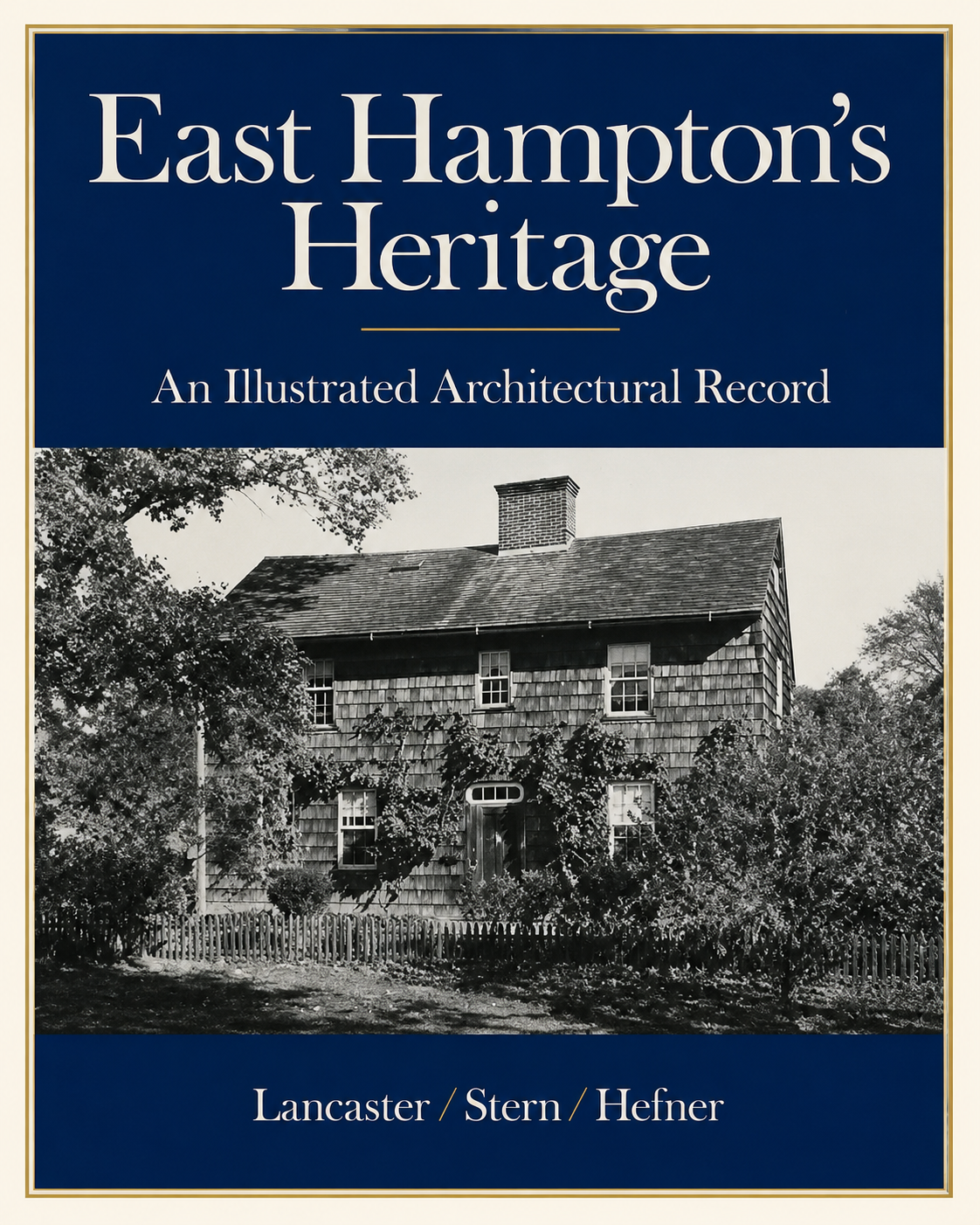
This residence is described as the “J. D. Voorhees House” in the East Hampton’s Heritage Book, written by Robert A.M. Stern, Robert Hefner and Clay Lancaster. JD Voorhees or Dr. James Ditmars Voorhees, was a highly prominent New York City Physician and Obstetrician who graduated from Princeton University and earned his medical degree at Colombia. He married Louise Brown, the daughter of Samuel Q Brown, who was the incredibly wealthy president of the Tidewater Oil Company. The Voorhees family became fixtures of the turn of the century Hamptons “summer colony” elite, who were heavily involved in the social and charitable scene. This home hosted fundraisers, high society concerts and benefits for the nearby Southampton hospital.
The architect was John Custis Lawrence, an East Hampton native who contributed more than 60 summer colony residences. Lawrence’s highly prolific work in the 1910’s heralded the development of the attenuated house, a trend toward unusually long, narrow and sweeping residences like the Dr. Frederick K Hollister Cottage built in 1913 on Lily Pond Lane. This style set a precedent for the construction of linear homes, which still exists to this day.
The date of the initial construction was 1912 to 1913, built by Edward M Gay. Gay established himself as one of the go-to contractors and built many iconic large scale summer homes that defined this era. His mother Annie Gay operated a prominent local boarding house on Main Street and later Gay Lane, where the post office is currently located, was named after her. The Gay family continued their legacy with the Amaden Gay Agency which was a fixture in real estate and is now known for insurance today.
Unlike the classic gray cedar shingle homes that dominate East Hampton, 80 Dunemere Lane was intentionally constructed with a grand formal stucco exterior. In the early 1900’s, wealthy New York families used stucco to capture a sense of European permanence, similar to the robust manor homes of the French and Mediterranean coastline. The use of stucco allowed for crisp, clean lines, prominent chimneys, and deep set window openings that made the home a highly recognizable landmark along Dunemere Lane. Listed in the inventory for the Division for Historic Preservation in 1979, this home overlooks Hook Pond and the Maidstone Club in the Dunemere Lane Historic District.
In the 1920s to the 1940’s, 80 Dunemere Lane was owned by Valentine Havens, a prominent corporate attorney and a tax reform pioneer who set up the legal framework that the federal government should treat husbands and wives as a single unified entity for income tax purposes. This directly laid the foundation for the “married filing jointly” tax bracket. Socially he and his wife were avid tennis players , frequently competing and winning many mixed doubles tournaments at the Maidstone Club.
The Taylor family was next in line, connecting Brooklyn roots, Manhattan high society, and the mid century summer colony elite of East Hampton. This family arrived on the East End in the early 20th century as part of the New York City industrialist migration. Irving Howland Taylor graduated from the prestigious Sheffield Scientific School at Yale University and organized the Merchants Chemical Company of New York., anchoring the family’s wealth in the mercantile business. He married Irene Hilman of Big Horn Wyoming and after spending several summers on Long Island, they purchased this residence in 1943. Irving Howland Taylor died in 1949. His wife spend every summer at the house until her death in 1985. She was well known in East Hampton for her beautiful gardens and her many charitable activities. The extended Taylor family has owned the property for over 80 years.
This residence is a once in a generation chance to own an irreplaceable piece of East Hampton History, with the freedom to renovate or build anew.